What incline push ups work, how to do them, how high your hands should be, and a 4-week plan to go from incline push ups to your first full floor push up.
Quick answer: An incline push up is a push up with your hands on a raised surface, like a wall, counter, table, bench or stair, and your feet on the floor. It works your chest, triceps and front shoulders, with your core holding your body straight. Because your hands are higher, you lift less of your body weight: about 41% with hands on a box around 60 cm (2 feet) high, compared with about 64% in a floor push up. That makes it the best way to build up to full push ups. Start where you can do 10 good reps, then lower the surface step by step.
Key takeaways
- Easier than a floor push up: the higher your hands, the less weight you lift.
- Same muscles: chest, triceps and shoulders, so the strength carries over to regular push ups.
- Progress by lowering the surface, not by doing endless reps at one height.
- Most people can reach a full floor push up in about 4 weeks of practice 3 times a week, starting from a counter or table.
What muscles do incline push ups work?
| Muscle | Role |
|---|---|
| Chest (pectoralis major) | Main pushing muscle |
| Triceps (back of the upper arm) | Straightens your elbows at the top |
| Front shoulders (anterior deltoids) | Help push and keep your shoulders stable |
| Serratus anterior (side of the ribs) | Keeps your shoulder blades against your ribs |
| Core (abs and obliques) | Holds your body in one straight line |
| Glutes | Stop your hips from sagging |
Incline push ups work the same muscles as floor push ups, just with a lighter load. That's why they're such a good stepping stone: the strength you build carries straight over.
How to do an incline push up
- Choose your surface: a wall, kitchen counter, sturdy table, bench or stair that won't move.
- Set your hands: slightly wider than your shoulders, on the edge of the surface.
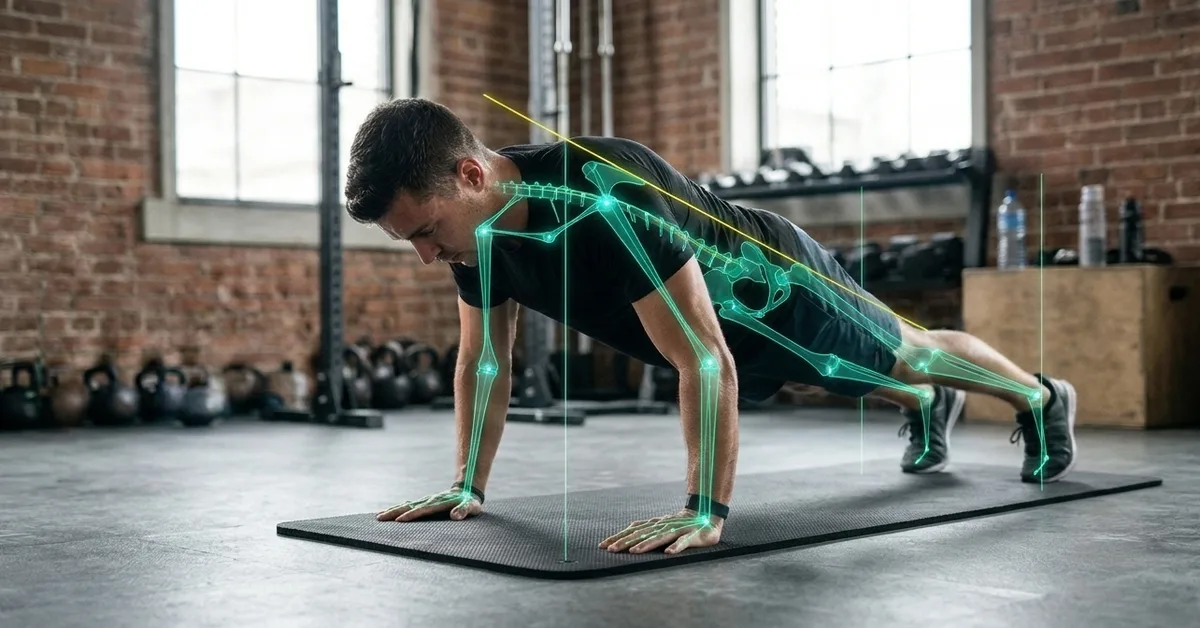
- Step back: walk your feet back until your body forms a straight line from head to heels. Squeeze your glutes and brace your abs.
- Lower with control: bend your elbows to about 45 degrees from your body and bring your chest to the edge, taking about 2 seconds.
- Push back up: press away until your arms are straight, without locking your elbows hard.
How high should your hands be?
The height of the surface sets how hard the exercise is. In a 2011 study in the Journal of Strength and Conditioning Research (summary), Ebben and colleagues measured how much body weight people pushed in different push up positions:
| Push up position | Body weight pushed |
|---|---|
| Hands on a box about 60 cm (2 ft) high | About 41% |
| Knees on the floor | About 49% |
| Hands on a box about 30 cm (1 ft) high | About 55% |
| Standard floor push up | About 64% |
| Feet on a box about 30 cm high | About 70% |
| Feet on a box about 60 cm high | About 74% |
So even a low step takes a real chunk of the load off, and a counter or table takes off more.
Use this table to pick your starting point:
| Level | Surface (approximate height) | Difficulty | Move on when you can do |
|---|---|---|---|
| 1 | Wall (standing almost upright) | Easiest | 3 sets of 15 |
| 2 | Kitchen counter (about 90 cm / 3 ft) | Easy | 3 sets of 12 |
| 3 | Table or desk (about 75 cm / 2.5 ft) | Moderate | 3 sets of 12 |
| 4 | Bench, sofa arm or chair seat (about 45 cm / 1.5 ft) | Harder | 3 sets of 10 |
| 5 | Low stair or step (about 20 cm / 8 in) | Close to a floor push up | 3 sets of 10 |
| 6 | Floor push up | Full push up | Your goal |
Start at the level where you can do 10 reps with good form and the last 2 feel hard.
A 4-week plan to your first floor push up
Train 3 days a week, with a rest day in between. Rest 60 to 90 seconds between sets.
| Week | What to do |
|---|---|
| 1 | Find your starting level. 3 sets of 8 to 12 at that height |
| 2 | Same height, add reps until you hit the "move on" target, then drop one level |
| 3 | 3 sets of 8 to 10 at the new, lower height. Add one slow set (4 seconds down) |
| 4 | Drop another level. At the end of the week, test: try 1 to 3 floor push ups |
If you can't do a floor push up yet at the end of week 4, stay on the lowest level you can manage for another 2 weeks. Everyone progresses at a different pace.
4 common incline push up mistakes
| Mistake | Fix |
|---|---|
| Hips sagging or sticking up | Squeeze glutes and abs; keep one straight line from head to heels |
| Elbows flaring straight out | Keep elbows at about 45 degrees from your body |
| Leading with your head | Lower your chest, not your chin, to the edge |
| Staying at one height for months | Lower the surface once you hit 3 sets of 10 to 12 |
Incline vs decline vs standard push ups
| Incline push up | Standard push up | Decline push up | |
|---|---|---|---|
| Hand and foot position | Hands raised | Hands and feet on the floor | Feet raised |
| Body weight you push | Less (about 41% at 60 cm) | About 64% | More (about 74% at 60 cm) |
| Difficulty | Easiest | Medium | Hardest |
| Extra focus | Good for learning form | Overall chest and arms | More upper chest and shoulders |
| Best for | Beginners, building up | Most people | Advanced, progressing further |
When you're ready for floor push ups
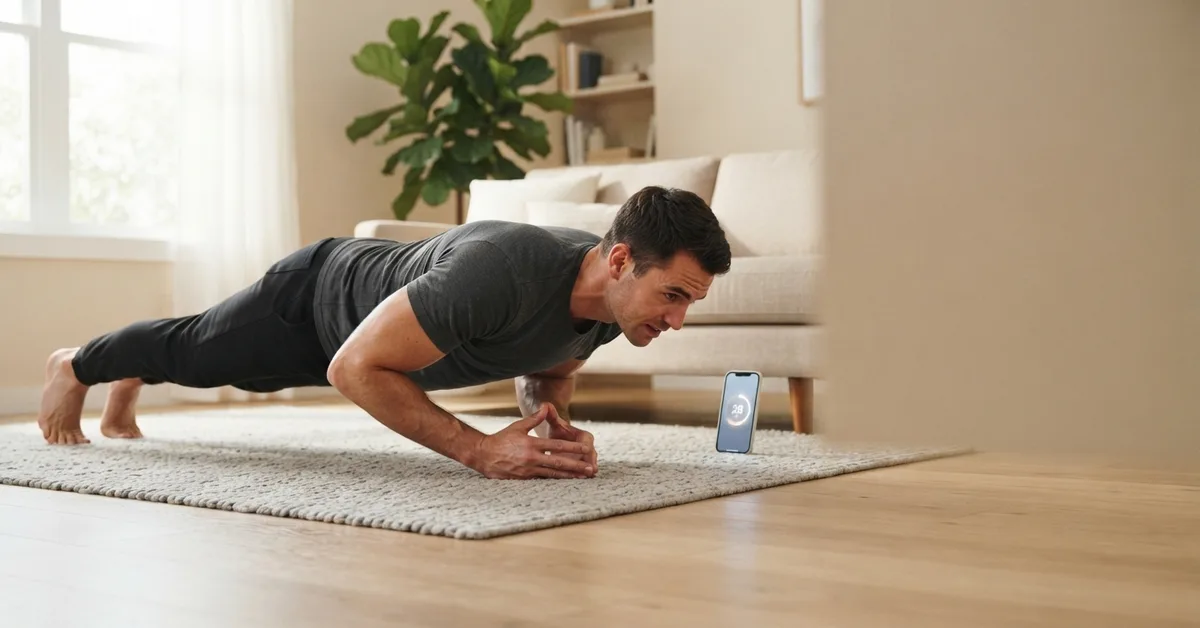
Once you can do a few floor push ups, ScrollToll: Screen-Time Gym can help you practice every day. It locks the apps you scroll too much, and each counted push up earns you screen time, 1 minute per rep by default. The camera counts regular and diamond push ups on your phone, without recording anything. Until you're there, you can earn time with squats, jumping jacks, lunges or a walk instead.
Next steps: learn proper push up form, then try diamond push ups when floor push ups feel easy. Or see how push ups for screen time works.
Download it on the App Store or Google Play.
Frequently Asked Questions
What do incline push ups work?
Incline push ups work your chest, triceps and front shoulders, with your core and glutes holding your body straight. They train the same muscles as floor push ups with less of your body weight, which makes them a good way to build up.
Are incline push ups easier than regular push ups?
Yes. With your hands raised, you push less of your body weight: about 41% with hands on a box around 60 cm high, compared with about 64% in a floor push up, according to a 2011 study. The lower the surface, the closer it gets to a full push up.
How many incline push ups should a beginner do?
Start with 3 sets of 8 to 12 at a height where the last 2 reps feel hard, 3 times a week. When you can do 3 sets of 10 to 12 with good form, lower the surface.
How high should the surface be for incline push ups?
Start where you can do 10 good reps: a wall or kitchen counter for most beginners. Then move down to a table, a bench and a low step before trying floor push ups.
Are incline push ups good for building chest muscle?
Yes, especially for beginners. They work the chest through a full range of motion. As you get stronger, lower the surface or add slow reps to keep making them challenging.
What's the difference between incline and decline push ups?
In an incline push up your hands are raised, which makes it easier. In a decline push up your feet are raised, which makes it harder: you push about 74% of your body weight with feet on a box around 60 cm high.
How long does it take to go from incline push ups to floor push ups?
Many beginners can do their first floor push ups in about 4 to 6 weeks of training 3 times a week, lowering the surface every week or two. It depends on your starting strength, so move on only when the target reps feel solid.
Can I do incline push ups every day?
A few easy sets most days is fine, but your muscles get stronger during rest. For steady progress, train 3 days a week with a rest day between sessions.
Ready to break the loop?
Download ScrollToll and start earning your screen time through real movement.