Your phone drains focus even when it is off. Discover research-backed ways to study without distraction and turn breaks into focus-boosting movement.
Why You Keep Reaching for Your Phone While Studying (And How to Actually Stop)
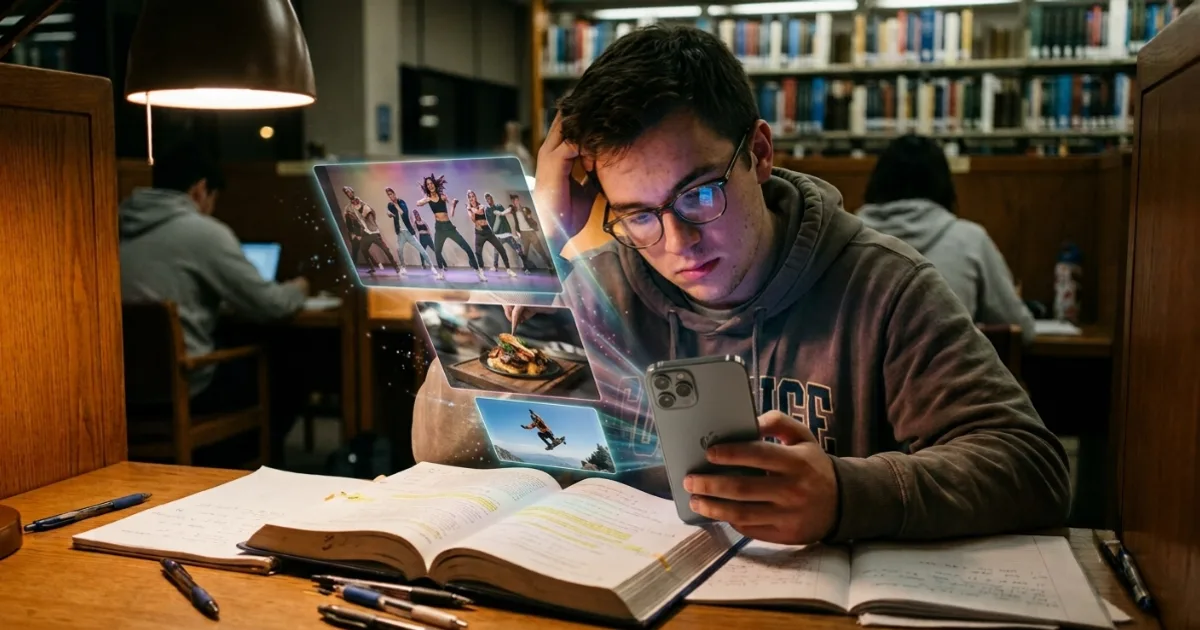
You sit down to finish one assignment. You’ll just check one notification first. Forty minutes and a dozen TikToks later, the textbook is still open to the same page. If that sounds like you, you are not lazy and you are not broken. Your brain is doing exactly what your phone was designed to make it do.
The good news: once you understand the mechanism, you can beat it. This guide breaks down the real science of why phones wreck your focus, what the research actually says, and a movement-based approach that works when willpower alone does not.
The problem is bigger than “just put it away”
Most study advice tells you to silence your phone and get on with it. If that worked, you would have done it already. The numbers show why it is so hard.
Researchers who tracked college students found that the average student unlocks their phone around 50 times a day and spends roughly four and a half hours on it, checking in about every 15 minutes from morning to night. The average adolescent or young adult finds it difficult to study for 15 minutes at a time, and when forced to do so will spend at least five of those minutes distracted. That is a third of your study time gone before you have even opened a browser tab you shouldn’t.
A survey focused specifically on homework found the pattern holds at home too. Teens were distracted during homework about 38% of the time, with both mind-wandering and digital devices driving that distraction, and the data suggested students spend roughly 204 hours per year trying to do homework while unintentionally distracted from it. That is more than eight full days a year lost to half-focus.
The “brain drain” effect: your phone steals focus while just sitting there
In a study of nearly 800 smartphone users at the University of Texas at Austin, researchers had people take demanding concentration tests with their phone either on the desk, in a pocket or bag, or in another room entirely. Cognitive capacity was significantly reduced when the smartphone was within reach, even when it was switched off.
As the lead researcher put it, “The mere presence of their smartphone was enough to reduce their cognitive capacity.” The reason is subtle but important: even when you successfully resist checking it, the effort of not thinking about your phone uses up limited mental resources, a phenomenon the researchers call “brain drain.”
In other words, having your phone face-down next to your notes is not a neutral choice. Part of your brain is quietly spending energy ignoring it, energy you needed for calculus.
Why the “quick check” costs you far more than a minute
You tell yourself checking a message takes two seconds. The problem is what happens after. Each time you switch from studying to your phone and back, your brain pays a “switch cost” as it reloads the mental context of what you were doing. Those seconds of fumbling to remember where you were add up fast, and they are why a “quick check” quietly turns a one-hour assignment into a two-hour slog.
And the cost is not only your time. A Rutgers University classroom experiment found something surprising. When phones and devices were allowed for non-academic use during lectures, students performed worse on end-of-term exams, and so did students who did not use a device themselves but sat nearby. The researchers described an insidious effect on exam performance and final grades, even among dedicated students who believed they could split their attention safely. Distraction is contagious, and it is quietly dragging down your grades even when you feel like you are keeping up.
Willpower is not the answer. Friction is.
Here is the reframe that changes everything: you do not have a discipline problem, you have a friction problem. Right now, opening Instagram takes zero effort. Resisting it takes constant effort. You are fighting a battle you have to win hundreds of times a day, and the app only has to win once.
The fix is to flip the friction. Make the distraction slightly harder to reach, and make the healthy choice the default. Encouragingly, students are open to this. In the homework survey, 64% of students believed they should focus more than they currently do, and most were willing to try strategies like silencing their phone or putting it out of sight, even though many were not yet doing so. The willingness is there. What is usually missing is a system that makes the good choice automatic instead of relying on you to remember it every single time.
The movement angle: turn the interruption into an advantage
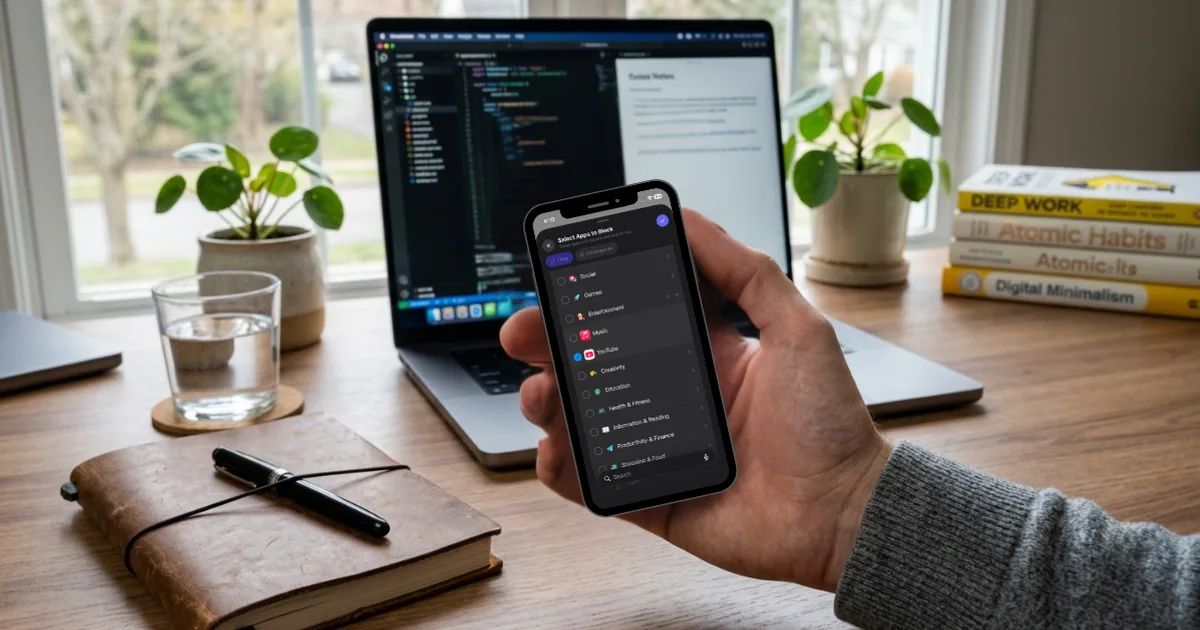
This is where a different kind of solution comes in. Instead of just locking your phone behind a passcode you can defeat in a moment of weakness, what if the thing standing between you and your feed was a set of pushups?
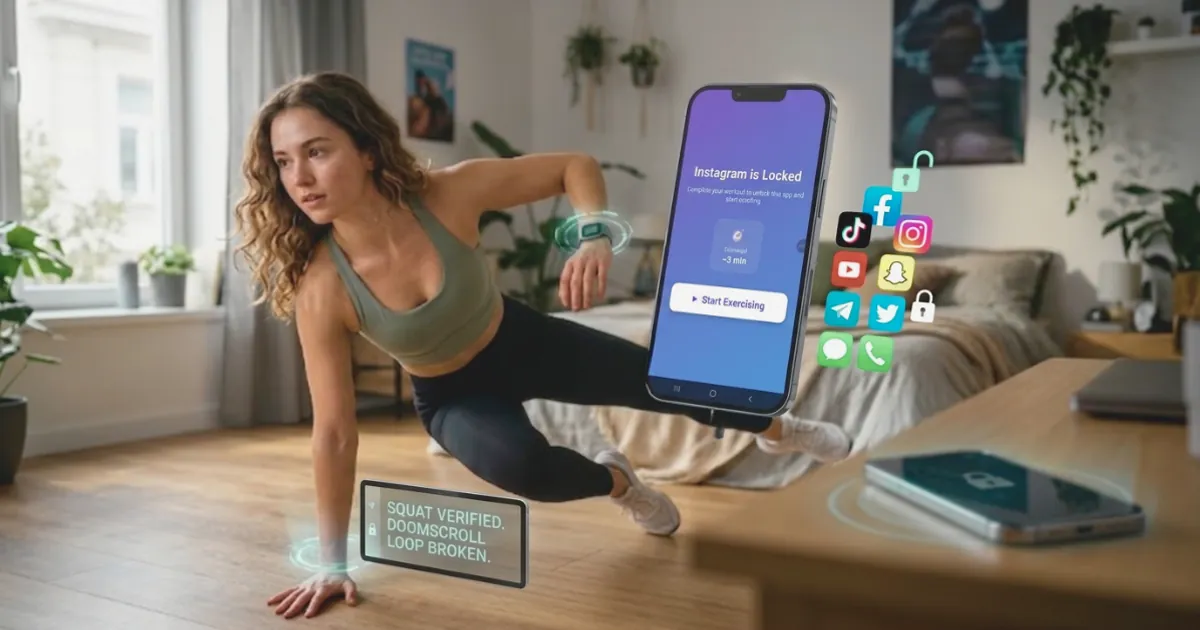
That is the idea behind ScrollToll, an AI screen-time blocker that makes you earn your scrolling with real exercise. Your distracting apps stay locked until you complete verified movement: pushups, squats, jumping jacks, lunges, or a short walk. The phone’s camera uses AI pose detection to count your reps and check your form, so you cannot fake your way past it. Every rep banks minutes you can spend later.
It sounds almost too simple, but the science behind why it works is solid on two fronts.
First, it adds exactly the friction you need. That moment where you have to get up and do ten squats before TikTok opens is often enough to break the autopilot reach-for-the-phone loop entirely. Most of the time you will realize you did not actually want to scroll, and you will go back to your work.
Second, the exercise itself makes your next study block sharper. This is not a wellness cliché. A large review of the research found that a single session of exercise produces a moderate increase in brain-derived neurotrophic factor (BDNF), a protein tied to learning and memory. Other research on students found that a short interval of moderate-to-intense aerobic exercise can improve attention by helping the brain filter out distracting stimuli during a task. Even brief movement helps: five minutes of movement between work intervals can restore energy, improve attention span, and prevent burnout.
So instead of a study break that means five more minutes of doomscrolling (which drains you further), you get a break that resets your focus and builds a healthy habit at the same time. The interruption becomes the upgrade.
A practical study system that actually holds up
Here is how to put all of this together into a routine that survives contact with a real Tuesday night of homework.
- Put the phone in another room, not just face-down: Remember the brain-drain study: distance matters more than you think. If you need your phone as a tool, that is exactly what an earn-to-unlock system is for.
- Work in focused blocks: Study in intervals of around 25 to 40 minutes, then take a real break. This keeps you from burning out and gives you natural checkpoints.
- Make your breaks movement, not scrolling: When the block ends, do a set of pushups or take a short walk instead of opening an app. You get the mental reset from the science above, and you are not re-entering the distraction loop.
- Set your blocked list before you start, not in the moment: Decide which apps are off-limits while your willpower is fresh, so a tired, distracted future-you cannot renegotiate the deal.
- Use accountability for the apps you can’t trust yourself with: If you know you will try to disable the block, a strict mode that requires exercise, a cool-down timer, or even a friend’s approval to unlock removes the escape hatch.
- Track the streak: Small wins compound. Watching a study-and-move streak grow gives your brain the same reward hit it was chasing on social media, pointed at something that actually helps you.
The bottom line
You are not failing at studying because you lack willpower. You are up against apps engineered by teams of experts to capture your attention, and the research is clear that they succeed even when your phone is switched off and sitting quietly beside you. The way out is not to try harder. It is to change the setup so that focus is the path of least resistance and every distraction costs you a little movement, movement that happens to make your brain work better anyway.
Trade the scroll for a set of squats, and let your body be the password. Your grades, and your future self, will thank you.
Sources referenced: University of Texas at Austin “Brain Drain” study (Journal of the Association for Consumer Research, 2017); Rutgers University classroom cellphone study (Educational Psychology); Kappan Online research on student attention; an ED-published survey on teenage smartphone use during homework; and meta-analyses on exercise and BDNF (PMC).
Frequently Asked Questions
Why do I keep checking my phone when I’m trying to study?
It is not a character flaw. Apps are specifically designed to trigger dopamine-driven checking habits, and research shows the average young person checks their phone roughly every 15 minutes all day long. On top of that, the “brain drain” effect means that even when you resist checking, part of your mind is spending energy ignoring the phone, which is why the interruptions feel almost automatic.
Does having my phone nearby really affect my focus if I’m not using it?
Yes. In a University of Texas study of nearly 800 people, participants’ available cognitive capacity dropped when their phone was simply within reach, even when it was powered off. Moving it to another room measurably improved performance.
How much study time do students actually lose to their phones?
One homework-focused survey estimated that students spend around 204 hours per year trying to do homework while unintentionally distracted, and found teens were off-task roughly 38% of their homework time. That is the equivalent of losing more than a full day of study for every three you put in.
Does exercise actually help you focus, or is that just motivation talk?
It is backed by research. Studies have found that even a single session of moderate exercise raises BDNF, a protein linked to learning and memory, and that short bursts of aerobic movement can improve attention by helping the brain screen out distractions. A five-minute movement break between study blocks can restore energy and reduce burnout.
How is exercising to unlock apps different from a normal app blocker?
A standard blocker relies on a passcode or timer you can override in a weak moment. Adding a physical requirement, like a set of AI-verified pushups, inserts a burst of friction at the exact moment you would otherwise reach for the phone on autopilot. That pause is usually enough to break the impulse, and the movement itself sharpens your focus for the next study block instead of draining it further like scrolling does.
Is this realistic for a busy student?
Yes, because the exercises are short and scale to what you choose. A few squats or a set of pushups takes under a minute, and you are turning break time you would have spent scrolling anyway into something that improves both your focus and your health. You are not adding a workout to your day; you are upgrading the breaks you were already taking.
Ready to break the loop?
Download ScrollToll and start earning your screen time through real movement.